ISSUE 176                                                                                January 12, 2023
Taiwan Weekly
Reliable report and analysis of the most important issues in Taiwan
In This Issue
● This Week in Taiwan: 
Other Important Events This Week


Publishers

President Tsai Under Internal and External Pressure
taiwanweekly2019@gmail.com
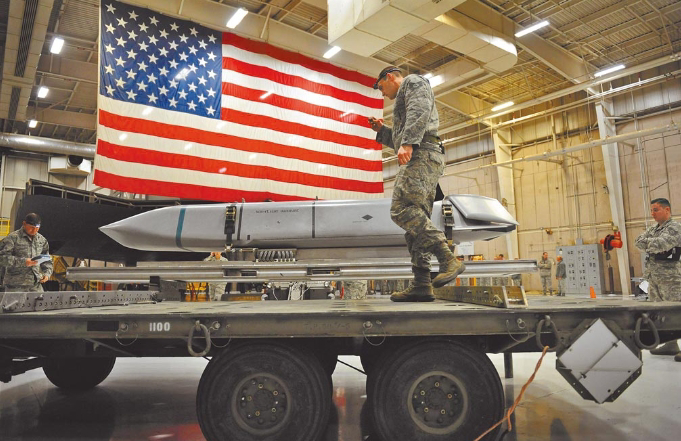
According to a commentator, Taiwan should learn to say "no" to the "good intentions" of the United States. Otherwise, Taiwan may sooner or later become a military vassal of the United States.
(Photo from: China Times)
Featured Opinion

Taiwan Must Learn to Say "No" to U.S.

By Wang Chien-chuang,

United Daily News, January 8, 2023


Taiwan is destined to be pro-American because of its history and political reality. However, in demonstrating its pro-American stance, is it really necessary for Taiwan to ask for American aid to procure arms from the United States? Or to let American officials work in Taiwan’s government?


Those who care about national defense have regularly seen the following messages in the past two years: “The U.S. hopes to turn Taiwan into a porcupine by setting up a ‘Regional Contingency Stockpile’ in Taiwan;” “The U.S. military delegation has visited Taiwan secretly to evaluate its armed forces capabilities;” “The United States and Taiwan have established joint special operations forces and U.S. Navy SEALs have come to Taiwan for joint exercises;” “Taiwan has extended compulsory military service to one year and it is welcomed by the White House and the American Institute in Taiwan (AIT);” and “U.S. urges Taiwan to develop civil defense and purchase large quantity of small weapons for asymmetrical warfare.” Although Taiwan already has defense self-reliance plans such as a “10-year Military Building Concept” and “five-year Military Forces Reconstruction,” the reality is that the United States has long-arm interference in various aspects of Taiwan’s defense, and Taiwan will soon become a military vassal of the United States.

Featured Editorial
taiwanweekly2019@gmail.com
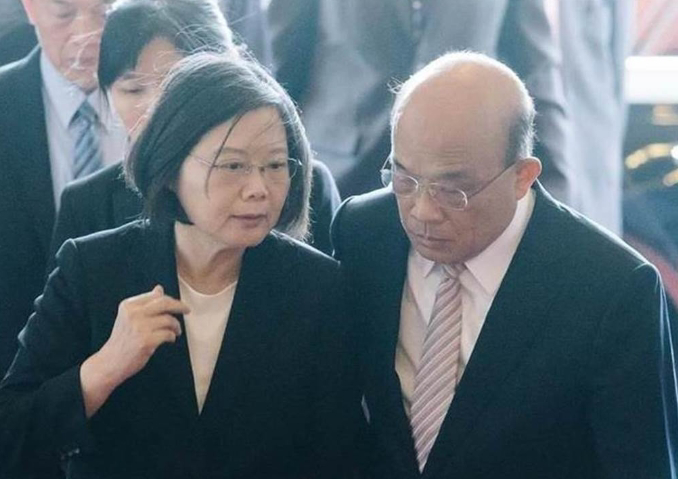
According to media commentary, President Tsai Ing-wen's tardiness in changing the premier fails to respond to public expectations for the government.
(Photo from: China Times)

Widespread Speculation About Cabinet Reshuffle: Can the Tsai-Su System Continue?

United Daily News Editorial, January 5, 2023


On the question of whether NT$180 billion (about US$6 billion) in over-levied tax revenue should be paid back to the people, the administration of President Tsai Ing-wen has made several turns in the past three days, changing from "rebate" to "no rebate" then back to a cash rebate to the people. After going back and forth, although finally pleasing the public, people feel it’s getting increasingly difficult to trust President Tsai and Premier Su Tseng-chang, the so-called "Tsai-Su System." Observing the entire turmoil over handling surplus tax revenue, President Tsai and Premier Su seem to be secretly fighting and are wary of each other but are forced to compromise and cooperate. This kind of atmosphere does not meet the expectations of the people after the ruling Democratic Progressive Party (DPP) met a grave setback in the recent election and still fails to display to the public a new mentality of governance.

…read more

From: https://udn.com/news/story/7338/6887575

Featured Opinion
taiwanweekly2019@gmail.com
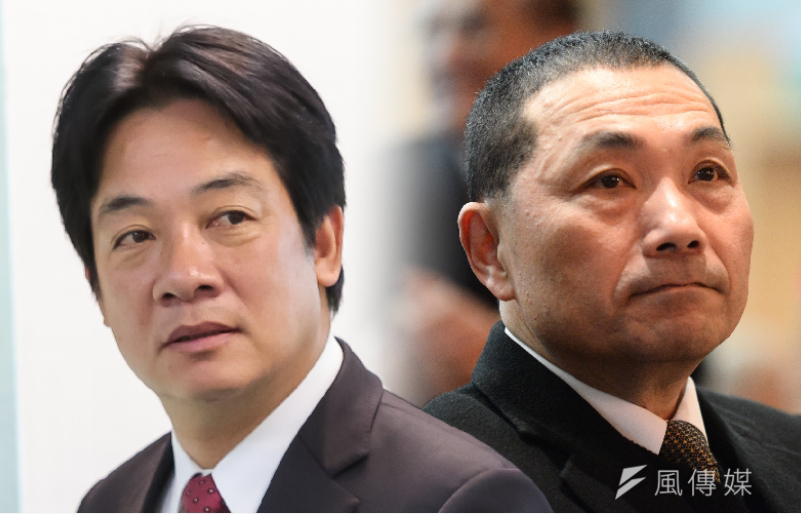
Hou Yu-ih and William Lai may represent the Kuomintang (KMT) and Democratic Progressive Party (DPP), respectively, as potential contenders in the 2024 presidential race, but they have their own challenges to face.
(Photo from: The Storm Media)

Competition Among 2024 Presidential Contenders Unfolds

By Chen Sung-shan

My Formosa, January 6, 2023


Recently, leading presidential contenders have begun to emerge. According to polls, Vice President William Lai and incumbent Mayor Hou Yu-ih of New Taipei are the most popular candidates for their political parties, the Democratic Progressive Party (DPP) and Kuomintang (KMT), respectively. Mr. Lai is presently running for the DPP chairmanship with hopes to secure the party’s presidential nomination. Mr. Hou’s assertion that "We are definitely not a pawn of any great power" has also been interpreted by observers to test public opinion for his future campaign. Evidently, the competition in the 2024 presidential election will see a contest between two strong candidates. Mr. Lai and Mr. Hou are bound to manage to surmount the political obstacles to win the presidential primaries in their respective parties under a “must-win” political atmosphere.

…read more

From: http://m.my-formosa.com/doc_191725.htm

This Week in Taiwan
taiwanweekly2019@gmail.com
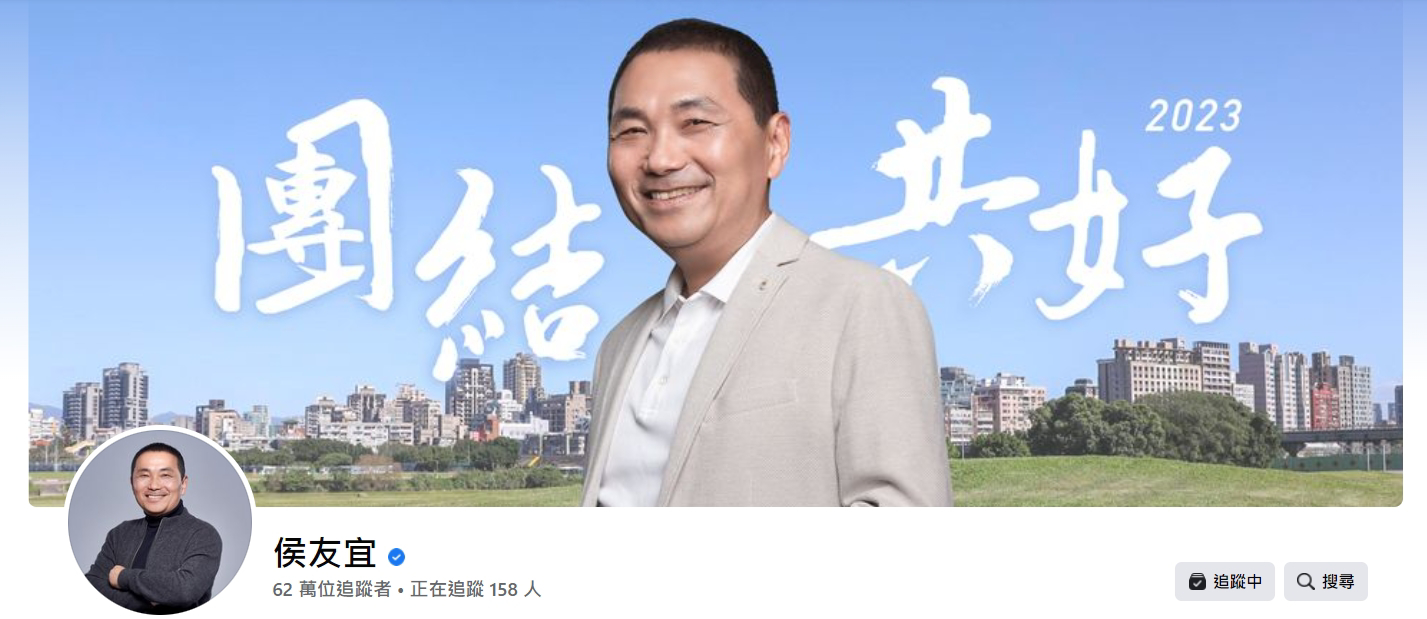
Hou recently changed the cover photo on his Facebook page with the slogan "United for the common good" and even indicated in his New Year remarks that "We are not the pawn of great powers." The moves have been interpreted as preparation for a 2024 presidential run.
(Photo from: Hou Yu-ih's Facebook)

January 3: Due to disputes over year-end bonuses and salary adjustments, Evergreen Airline Services personnel initiated a strike, and the unrest has spread. It is speculated that personnel of Taoyuan International Airport Services, a subsidiary of China Airlines, may also join in protest and refuse to work over Chinese New Year and the February 28 holidays, affecting transportation over Lunar New Year.


January 4: Premier Su Tseng-chang announced that NT$140 billion (about US$4.5 billion) in surplus tax revenue will be distributed to the people so that everyone can share the fruits of economic progress. Each person is expected to receive NT$6,000 in cash (about US$196).


January 4: In his New Year's Day remarks, Mayor Hou Yu-ih of New Taipei stated that Taiwan is not a pawn of the great powers. His Facebook cover photo was also changed with the slogan "United for the common wellbeing," interpreted as interest and preparation for the 2024 presidential election. Voices have emerged within the opposition Kuomintang (KMT) calling upon the party's Central Committee to directly nominate Hou instead of holding a primary election and risking internal division. Hou did not respond specifically to the media on which great power he has in mind. 


January 5: Engineering defects were observed in the newly opened Hsinchu Baseball Stadium. The Hsinchu City Government found waste in the shallow soil, a problem difficult to mitigate in the short term. The city government announced that it would give up applying to host the qualifier round of the World Baseball Classic and has also filed suit against contractors over serious concerns of cutting corners on construction materials used.


January 5: After retirement, a former colonel of the Air Force went to mainland China to do business and was absorbed by the mainland to develop an intelligence network in Taiwan. He was involved in recruiting six active officers from the Navy and Air Force to pry confidential information of the Armed Forces. The Kaohsiung Branch of the Taiwan High Prosecutors Office directed units including the National Security Division of the Investigation Bureau, Ministry of Justice, to search related premises. After interrogation, the suspect and three military officers were detained, whereas another three were released on bail. More military officers may be involved in the case, and the investigation is being expanded.


January 7: To ensure that advanced semiconductor manufacturing capabilities continue to stay in Taiwan, the Legislative Yuan passed revised provisions of the Statute for Industrial Innovation, dubbed the Taiwanese version of the CHIPS Act. In the future, companies with technological innovations, such as semiconductors, 5G, and electric vehicles, and which are key players in the global supply chain, may deduct from their enterprise income tax 25 percent research and development (R&D) costs and 5 percent expenditures for purchase of new machines with advanced manufacturing capabilities. This is the highest R&D and equipment investment tax break in Taiwan's history.


January 7: The Mini-Three Links between Kinmen and mainland China's Xiamen restarted. Of the 37 who entered Kinmen from Xiamen on the first day that travel resumed for the Chinese New Year holidays, seven were found positive for the coronavirus (COVID-19) with saliva testing, a positive rate of 18.9 percent.


January 8: Following the election of Chiang Wan-an as Taipei mayor, the by-election for his former legislator seat was held. KMT nominee Wang Hung-wei defeated Enoch Wu of the Democratic Progressive Party (DPP) and was elected.
Taiwan Weekly is a newsletter released every week by Fair Winds Foundation and Association of Foreign Relations which provides coverage and perspectives on the latest developments in Taiwan.

The conclusions and recommendations of any Taiwan Weekly article are solely those of its author(s) and do not reflect the views of the institutions that publish the newsletter.

This message was sent to bestor@gmail.com by taiwanweekly2019.gmail.com@email.benchmarkapps.com
8F, No. 285, Sec. 4, Zhongxiao E. Rd., Da'an Dist., Taipei City 106, Taiwan (R.O.C.)


Unsubscribe from all mailings Unsubscribe | Manage Subscription |
View this email in your browser
You are receiving this email because of your relationship with Taiwan Weekly. Please reconfirm your interest in receiving emails from us. If you do not wish to receive any more emails, you can unsubscribe here.


This is a Test Email only.
This message was sent for the sole purpose of testing a draft message.